Illustration
·
Design Research
—
Social Impact & Development
Client
Dalberg Design
Year
2021
Discipline
Illustration
,
Design Research
Sector
Social Impact & Development
Stack
Miro, Adobe Illustrator
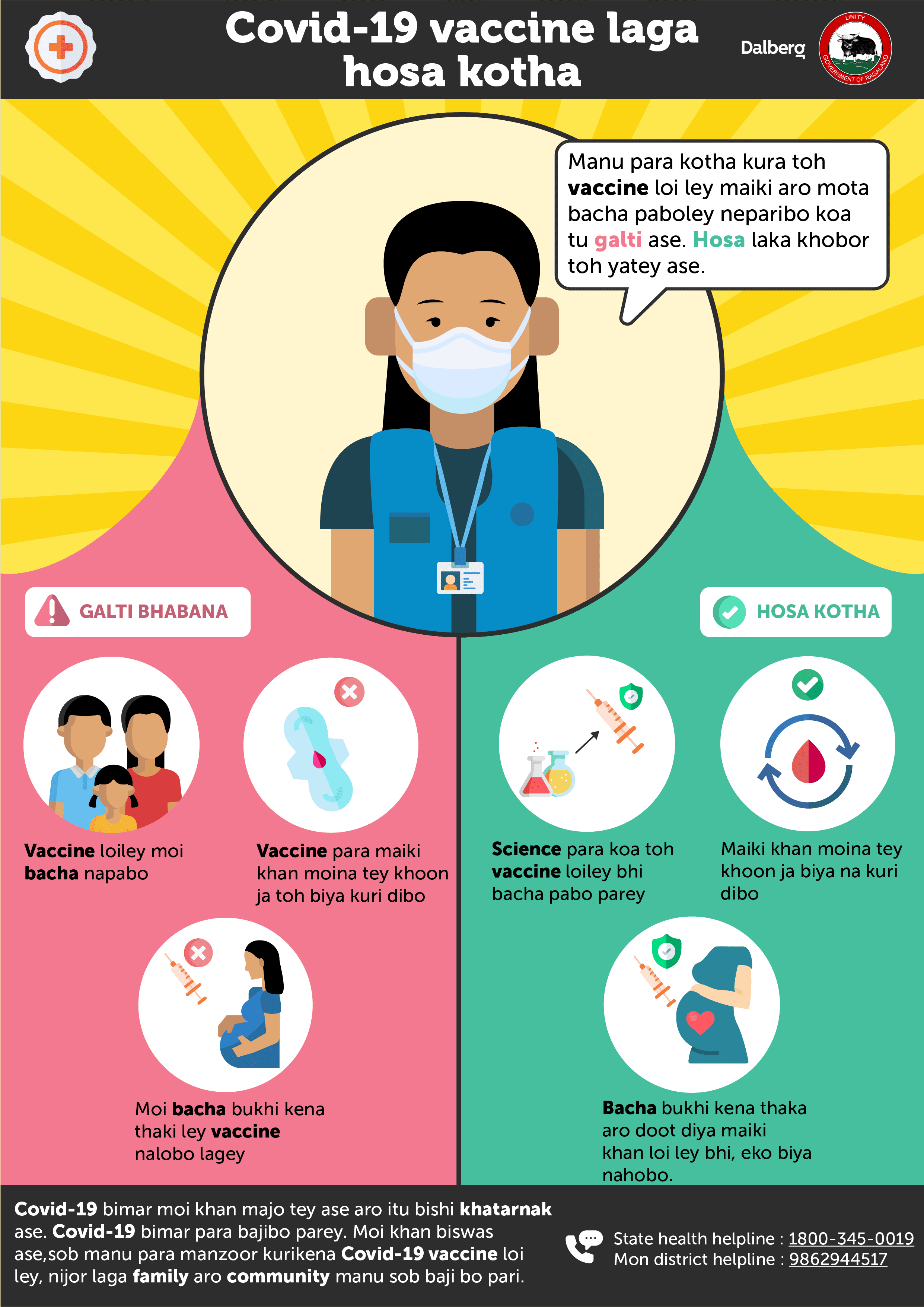
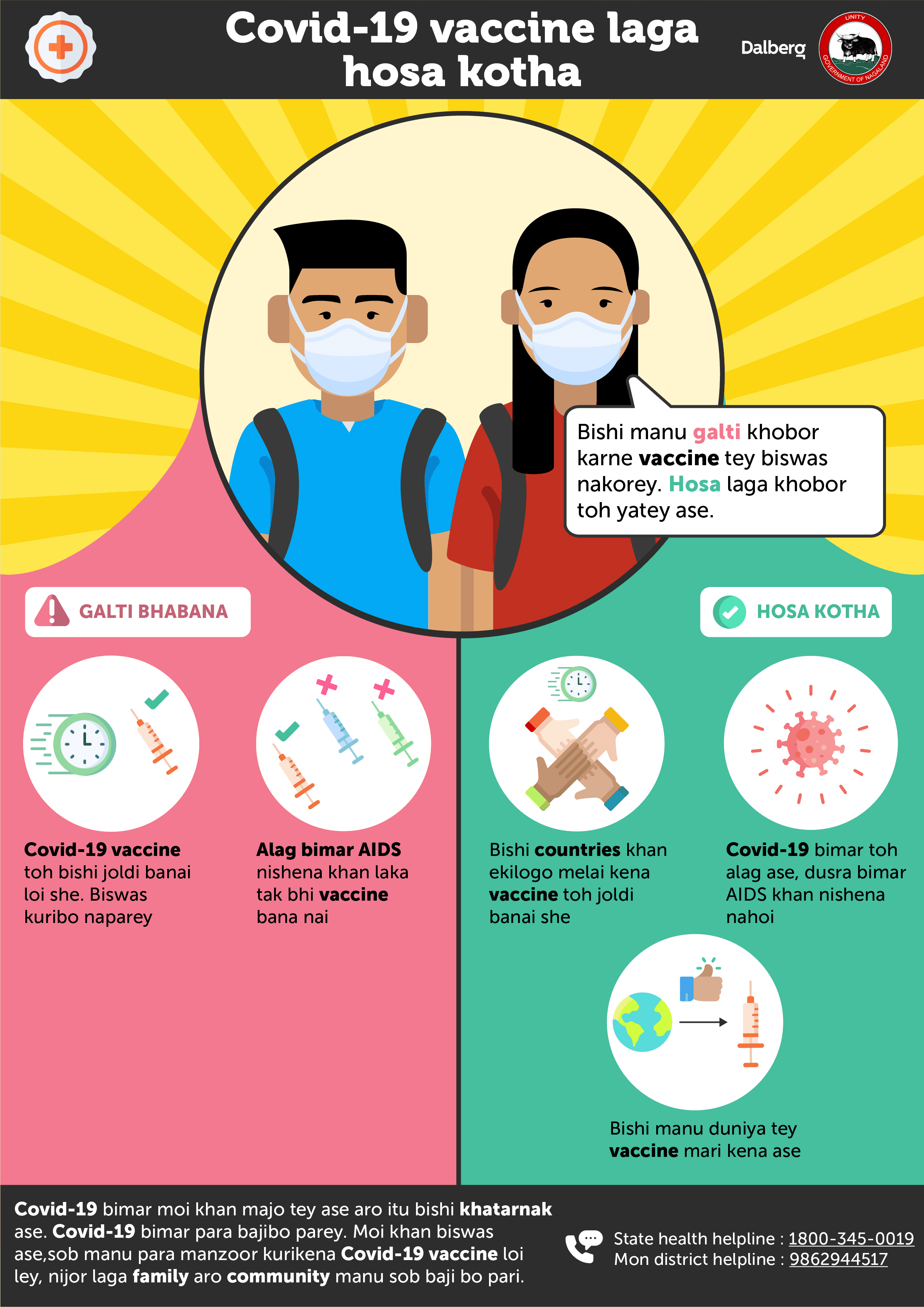
The COVID-19 vaccination programme was started in early 2021, across multiple states in India, to help people reduce the severity of symptoms of contracting the coronavirus. However, several cases were being reported of people that were hesitant due to prevalent misinformation being circulated on social media about the vaccine. I worked in collaboration with Dalberg Design and the Government of Nagaland to take part in the research process along with creating the final communication design collateral to help tackle vaccine hesitancy in Mon District, Nagaland (India).
The full story — choose a chapter
Context
Process
Outcome
In the first half of 2021, the Government of Mon, Nagaland, had mandated all citizens to get vaccinated, but there was resistance to getting the vaccine. A majority of it stemmed from fake news circulating on WhatsApp, along with various local and cultural idiosyncrasies in the population. They contracted Dalberg Design to help dispel common myths about the vaccine and create communication design that would encourage vaccination. We had six weeks to research, design and deliver, in a context where limited data connectivity made digital-only interventions challenging, low health literacy meant medical jargon would not work, the cultural context required a local visual language rather than generic health posters, and trust in government agencies was low.